1. Why Converting Fabric into Finished Sacks Is a Margin Game of Half-Percentages
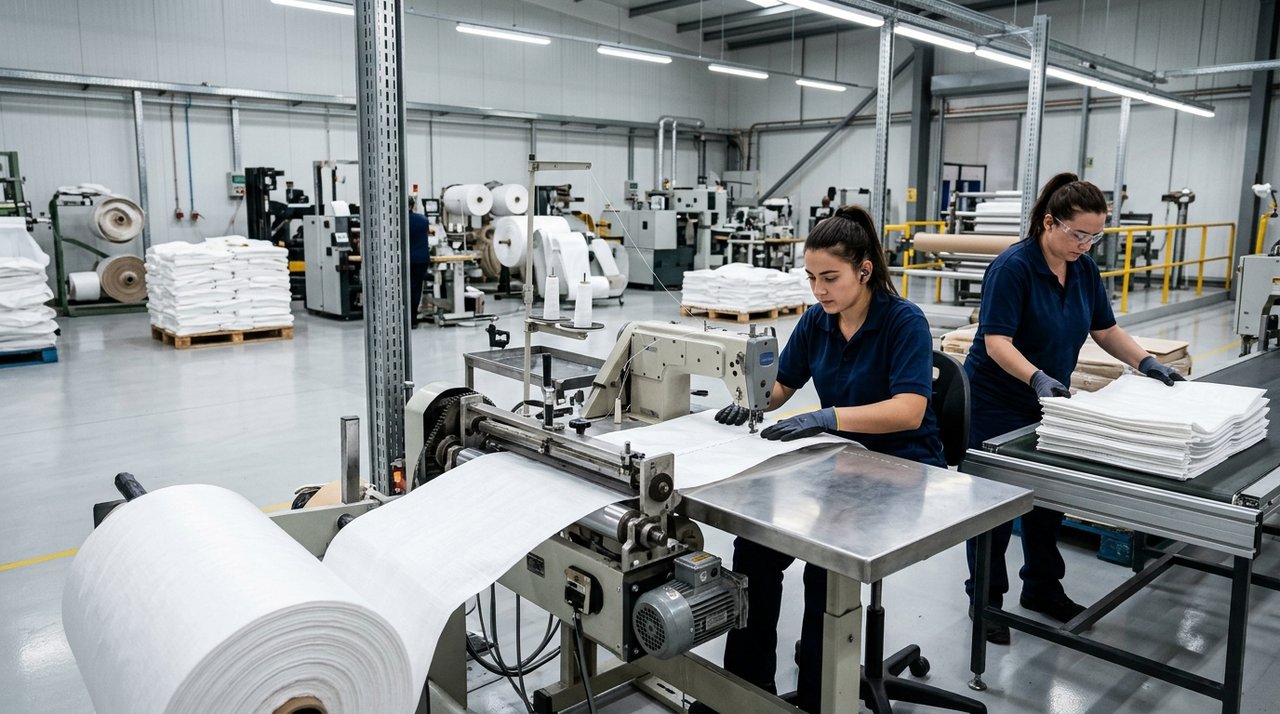
Converting polypropylene woven fabric into finished packaging sacks—for rice mills, flour chakki brands, sugar refineries, cattle-feed plants, fertilizer cooperatives, and cement units—looks straightforward on paper. You issue tubular fabric rolls of a known width and GSM, cut them to a specified cut-length plus hem allowance, fold and stitch the bottom seam, print the customer's artwork, press bundles into hydraulic bales, and dispatch.
On an actual converting floor, however, five rapid handoffs happen simultaneously across shifts. Parent rolls sit half-consumed on unwind stands; plain cut-and-stitched sacks wait in floor stacks for the four-color flexo press; urgent repeat party orders pull 5,000 plain 19x32-inch sacks out of unprinted buffer stock; and damaged misprints or short-cut pieces get tossed into a corner chindi bin without anyone weighing or recording them. Across thirty days, a seemingly harmless 2.2% gap between theoretical bag yield and actual baled output quietly eats lakhs of rupees in polymer value.
Built as a dedicated converting edition of the Panksoft WovenSuite platform, WovenSuite – BagFactory replaces shift chalkboards, loose supervisor slips, and disconnected billing spreadsheets with one continuous digital thread from parent roll issue to customer bale delivery.
2. Parent Fabric & Sack Input Tracking: Account for Every Kilogram Issued
Profitability in a bag unit starts before the hot-knife cutter makes its first slice. Whether you purchase tubular PP rolls from outside mills and traders or transfer them from your own weaving shed, you need exact clarity on how much raw fabric sits in your godam and which rolls were issued to the converting line today.
- Clean Roll & Semi-Finished Sack Inwarding: Record incoming supplier rolls (via fast manual entry or 1-click Excel packing list import) as well as semi-finished unprinted sacks sourced during peak-season rushes, sorted neatly by width, GSM, color, lamination status, and godam.
- Line-Wise Fabric Issue Control: Log every parent roll or fabric batch issued to cutting and stitching lines. Instead of discovering missing tonnage during a painful year-end stock audit, management compares issued fabric weight directly against finished bag output every week—a practice we examine closely in our guide on controlling fabric-to-bag yield in PP woven bag factories.
- Seamless Fit for Integrated Plants: If your company weaves its own raffia rolls on circular looms or trades surplus rolls in the open market, explore WovenSuite – Manufacturer and WovenSuite – Trader to see how Panksoft aligns loom floors, roll trading, and bag converting.
3. Cutting & Stitching Production Entry Without Slowing Down Your Floor
Whether your plant runs high-speed automatic BCS (bag cutting, folding, and stitching) conversion lines, valve-bag tubers, or rows of skilled operators at heavy-duty single-fold and double-fold sewing tables, production tracking has to be fast enough for a busy shift supervisor to complete in five minutes.
WovenSuite – BagFactory gives your floor clerk a clean daily production entry screen tailored to real sack specifications. Record completed cuts and stitched pieces by bag size (such as 18x27", 21x35", 24x40", or custom export dimensions in centimeters), fabric GSM/color, mouth finish (heat-cut, zig-zag cut, or hemmed), stitch type, and optional LDPE inner liner status.
Every saved production entry immediately increases your live Size-Wise Bag Stock while deducting consumed input material. Supervisors and owners can spot shift-to-shift drops in piece output immediately rather than finding out on dispatch morning that an urgent 25,000-bag flour mill order is still 4,000 pieces short.
Handling Real-World Sack Variations: Liners, Gussets, Valve Bags & BOPP Finishes
No two bag converting units run identical product mixes. A plant supplying agro-processors in Punjab or Andhra Pradesh may turn out millions of 50-kg open-mouth hemmed rice and paddy bags, whereas a coastal unit in Gujarat or Maharashtra focuses on moisture-barrier LDPE-lined sugar sacks, micro-perforated chemical bags, block-bottom cement valve bags, or glossy multicolor BOPP pinched-bottom pet-food and seed packaging.
Generic inventory software collapses under all those combinations because staff end up creating messy, inconsistent item names on the fly. WovenSuite – BagFactory organizes your catalog through structured Item Groups and Item Masters. You define clean parameters—bag width and cut length, unlaminated vs. laminated fabric grade, side gusset depth, single-fold single-stitch vs. double-fold chain-stitch bottom construction, mouth hemming or zig-zag heat cut, and inserted vs. cuffed PE liner—once in your master table. From that point forward, every cutting clerk, printing supervisor, storekeeper, and billing executive selects the exact standardized item without ambiguity.
- Piece-to-Weight Cross Checks: Catch stealthy GSM drift or over-length cutting early by comparing theoretical bag weight (for example, 82 grams per sack on a 50-kg grain bag) against actual baled weighbridge averages across shifts.
- Second-Quality & Misprint Segregation: Log B-grade stitched bags, startup print-registration trial pieces, and edge chindi separately so rejected pieces never inflate your prime salable bag stock or surprise your dispatch team during urgent truck loading.
- Multi-Shift Line Comparison: Compare day-shift versus night-shift cutting and stitching counts per line or crew to reward consistent operators and identify machines needing cutter-blade or looper maintenance.
4. Flexographic Printing Tracking and Size-Wise Finished Bag Inventory
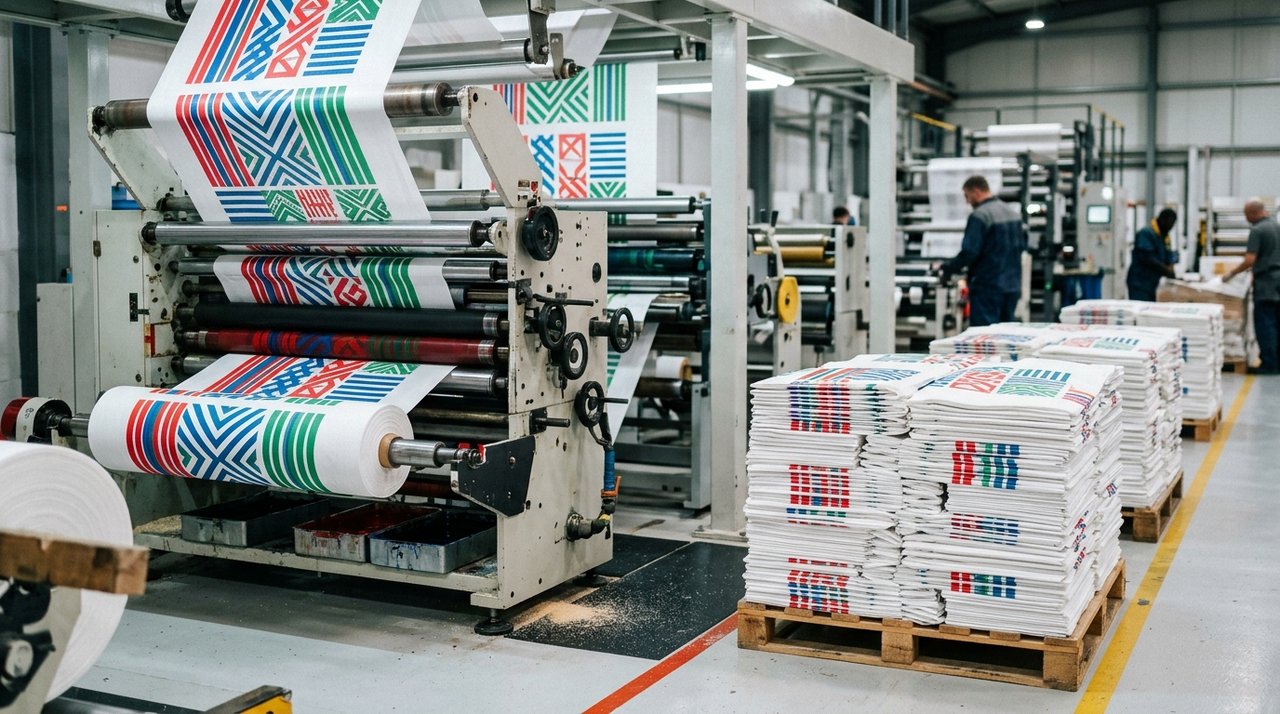
What separates a bag converter's inventory headache from almost any other factory is the split between common plain stock and party-branded printed stock. Ten thousand unprinted 50-kg white laminated sacks of 22x36 inches can fulfill orders from six different agro-traders; once printed with "Shree Ganesh Rice Sortex" in three colors, those sacks belong exclusively to one buyer.
Clear Separation of Plain vs. Printed Party Orders
WovenSuite – BagFactory tracks printing status alongside customer orders. You always know how many plain cut-and-stitched bags of each size are available for immediate custom printing, how many branded bags are already printed and baled per party, and what balance remains pending on open contracts.
If your unit sends rolls out for external BOPP multicolor film lamination or rotogravure printing before cutting in-house, WovenSuite's job-work challan and transit modules keep complete custody of outward material until it returns—explained step by step in our article on managing external lamination and printing job work. And when you accumulate surplus plain bag sizes or odd-print overruns, you can clean your regional buyer list with Panksoft Email Checker and mail ready-bale clearance offers directly to grain, pulse, and sandbag buyers using Panksoft Bulk Email Sender.
5. Hydraulic Bale Packing, Order Fulfillment & Instant GST/VAT Billing
Finished PP woven sacks rarely ship loose—they leave the factory compressed into strapped hydraulic bales of 500 or 1,000 pieces (often grouped into inner bundles of 50 or 100 bags) and billed either per piece or per kilogram depending on buyer terms. Manual dispatch registers constantly confuse bundle counts, bale weights, and partial truckload balances.
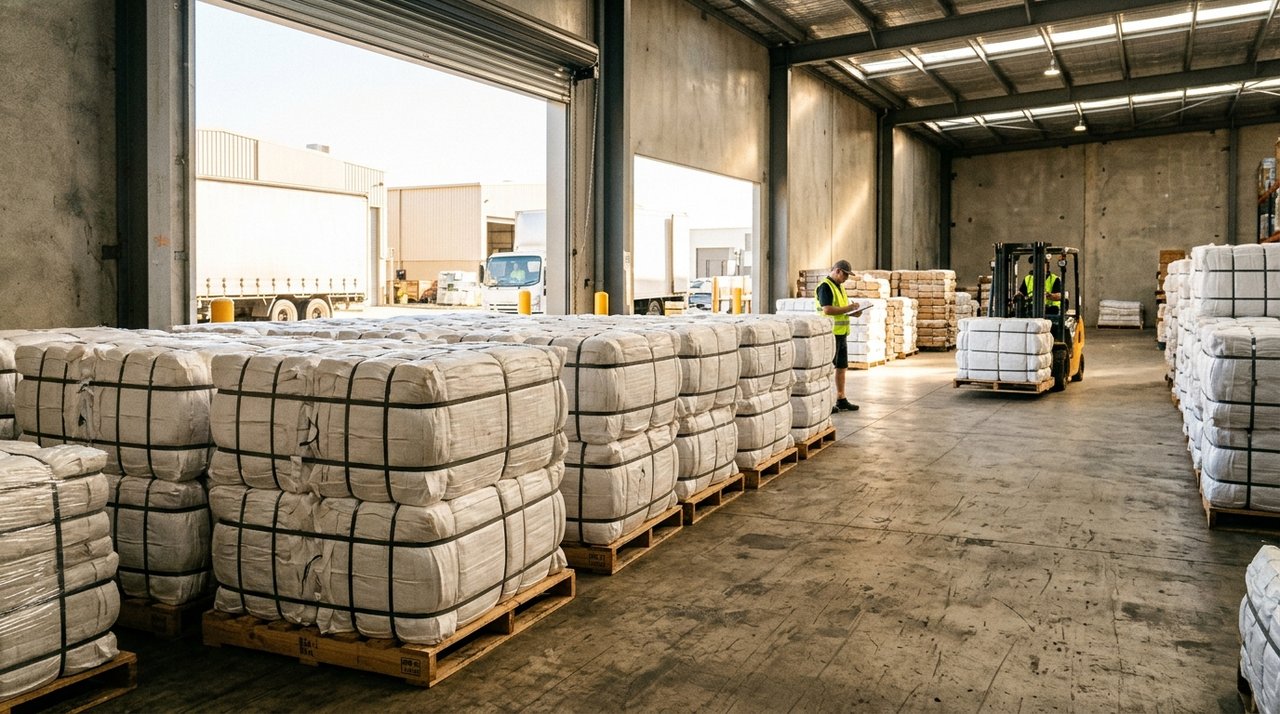
- Pending vs. Dispatched Order Ledger: When a cement, sugar, or seed company places a 100,000-bag order scheduled across four weekly deliveries, BagFactory tracks every dispatched bale and shows the exact remaining balance at a glance.
- One-Click Packing Lists & Tax Invoices: Generate clean, error-free bale and weight packing lists paired with domestic GST invoices, GCC/African VAT bills, or container export documentation—supporting bag factories across all regions highlighted on our Countries We Serve page.
- Direct PDF Invoice Email & SMS Dispatch Alerts: Email formatted PDF invoices straight to your buyer's procurement desk and trigger instant mobile SMS bill summaries the moment the vehicle leaves your gate.
Container Stuffing & Seasonal Agro-Peak Readiness
During harvest, milling, and construction peaks, buyer trucks queue up back-to-back while export orders demand strict 20-foot or 40-foot high-cube container bale tallies. When an overseas importer in Nairobi, Muscat, or Rotterdam orders 180,000 printed 25-kg polypropylene sacks packed in 360 numbered hydraulic bales of 500 pieces each, customs clearance depends on exact gross-weight and net-weight alignment between your commercial invoice and packing list. WovenSuite – BagFactory compiles bale counts, piece totals, and kilogram weights cleanly in seconds—eliminating late-night spreadsheet errors and keeping port clearances smooth.
6. Floor Chalkboards & Generic Tally Sheets vs. WovenSuite – BagFactory
Standard accounting packages only see final invoice numbers; they have no idea how many pieces your cutting machine produced on Tuesday night or why three parent rolls yielded 400 fewer bags than expected. Compare the difference:
| Converting Stage | Manual Shift Registers & Spreadsheets | Panksoft WovenSuite – BagFactory |
|---|---|---|
| Fabric-to-Bag Yield | Trim loss, damaged cuts, and uncounted wastage go unnoticed for months. | Direct comparison between fabric rolls issued and stitched bag output per shift. |
| Size-Wise Stock Visibility | Physical floor walks required to check plain vs. party-printed bag counts. | Live browser lookup of every bag size, GSM, and print specification by godam. |
| Party Printing Orders | Verbal instructions to press operators cause missed deadlines or over-printing. | Structured party order & printing progress tracking from plain stock to bale. |
| Bale Dispatch & Billing | Slow manual packing list preparation while transport vehicles wait at the gate. | Instant bale/piece/kg packing lists, GST/VAT invoices, PDF email, and SMS alerts. |
7. Staff Permissions, Multi-Warehouse Control & Factory Intelligence
In a busy converting unit, your cutting supervisor, printing foreman, storekeeper, and billing accountant each play distinct roles. WovenSuite – BagFactory provides clean User and Admin access controls so floor staff log fabric issues, stitching counts, and bale dispatches effortlessly without viewing sensitive party rates or modifying closed invoices without administrator approval.
Directors can log in from any phone or laptop to review 20+ live operational and financial reports—covering bill-wise, date-wise, party-wise, size-wise, and item-group-wise sales, purchases, pending orders, and multi-godam stock summaries, all part of our unified Our Products suite. Plus, if your bag factory currently runs an aging Visual Basic 6 or FoxPro desktop program, our engineers provide hassle-free Legacy Software Migration, alongside tailored Custom Software Development for specialized FIBC jumbo-bag job cards, piece-rate stitching wage sheets, or bale barcode labels.
8. Affordable BagFactory Edition Plans & Converter FAQs
Panksoft priced WovenSuite – BagFactory so even a single-shed converting unit can digitize its entire floor for less than ₹40 a day. Compare all product plans anytime on our pricing overview.
Professional Edition
Built for single-unit PP woven bag converting and stitching factories.
or ₹1499 / month billed monthly
- 3 user logins included
- 1 factory warehouse (godam)
- Fabric input, cutting, stitching & printing entry
- Bag size-wise stock & bale dispatch billing
- Standard sale, purchase & production reports
- Free setup, opening stock import & support
Enterprise Edition
Ideal for high-output multi-line converters and multi-godam sack suppliers.
or ₹1999 / month billed monthly
- Unlimited floor, billing & admin users
- Unlimited godams & dispatch depots
- Advanced yield, ageing & party order reports
- Role-based Admin & User edit security
- Instant PDF bill email, SMS & stock broadcasts
- Priority onboarding & dedicated support
Frequently Asked Questions — WovenSuite BagFactory
Can we bill some customers per bag (piece rate) and other buyers per kilogram?
Yes. WovenSuite supports flexible item masters and billing units so your dispatch team can invoice finished bales by piece count, bundle, or net kilogram weight cleanly.
Does BagFactory work for both plain stitched PP bags and multicolor BOPP laminated bags?
Yes. You can maintain distinct item groups for unlaminated sacks, LDPE-lined bags, flexo-printed bags, and BOPP laminated pinched or stitched sacks with full size-wise stock visibility.
We weave our own fabric AND stitch finished bags—which edition should we choose?
Talk to our specialists during your free demo; we can configure a unified setup or combine Manufacturer and BagFactory modules so loom production flows directly into cutting and bale dispatch.
Do we need to install any heavy server hardware inside our dusty factory shed?
No. Everything runs securely in the cloud with automatic encrypted backups. Any rugged laptop, office PC, tablet, or smartphone with internet access is ready to work immediately.
How does BagFactory help reduce end-of-month stock differences between the cutting floor and billing office?
Because every parent fabric roll issued to cutting lines, every daily stitched bag entry, every printed order batch, and every dispatched bale updates one shared cloud database, floor supervisors and accounts staff stop keeping separate notebooks—eliminating month-end reconciliation surprises.
Can we send automatic SMS dispatch summaries and PDF tax invoices directly to agro-mill buyers?
Yes. As soon as a truckload of bales is billed, one click emails the formatted PDF invoice and packing list to your buyer and sends a concise SMS bill summary straight to their mobile number.
Track Every Cut, Stitch, Print & Bale effortlessly
Connect with our converting software team via our Contact & Demo Desk for a live, zero-obligation walkthrough.